My Story
Meet Ruth and Brilliance in Blue
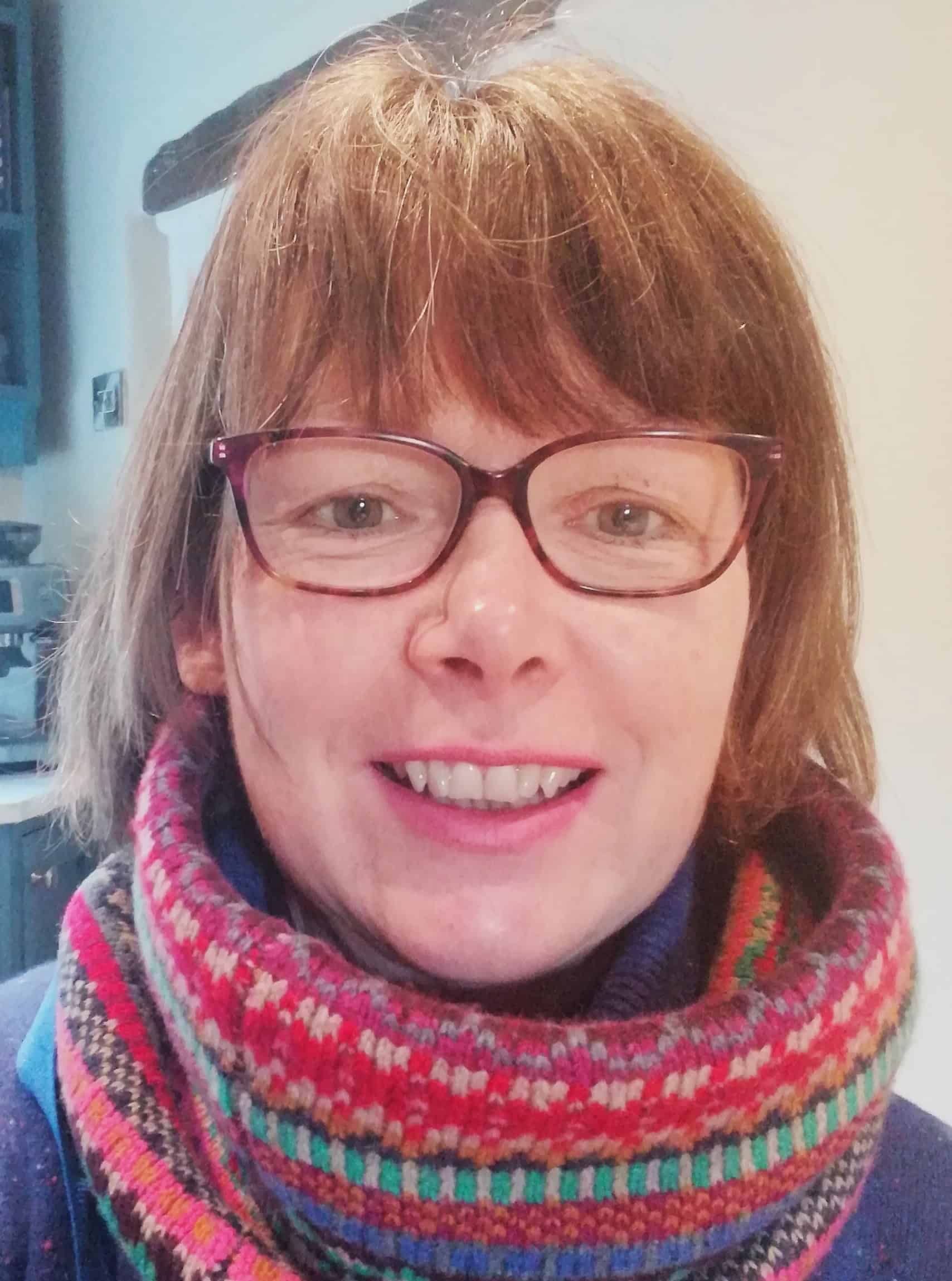
Who is Brilliance in Blue?
Ruth began her working life in the RAF as a photographic interpreter using aerial photographs to extract intelligence. A stereoscope which turns 2-D images into 3-D and an eye at looking for detail were the tools of the trade.
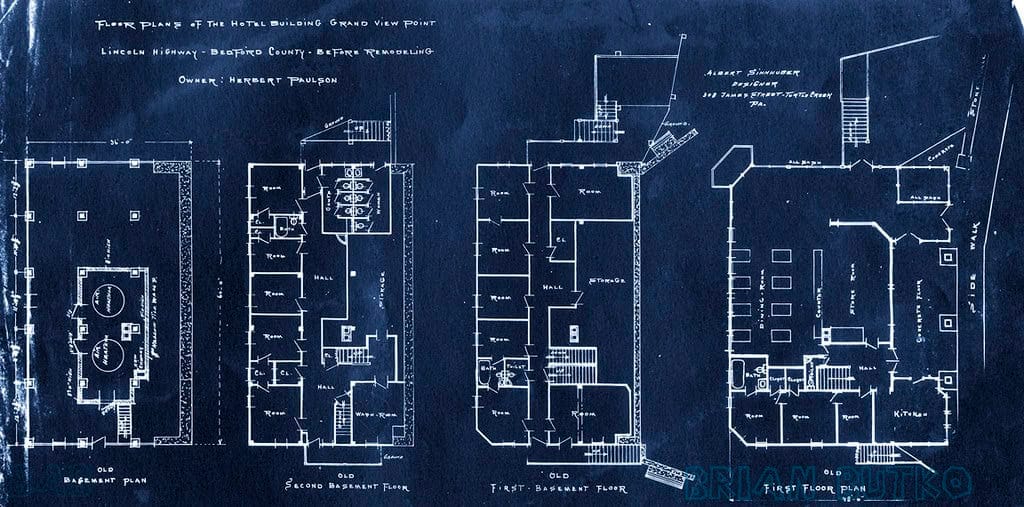
After the RAF Ruth retrained as a science teacher and has been teaching Biology and Chemistry for 30 years. After reading an article about blueprints – those drawings produced by architects and engineers she became fascinated by the process of cyanotype.
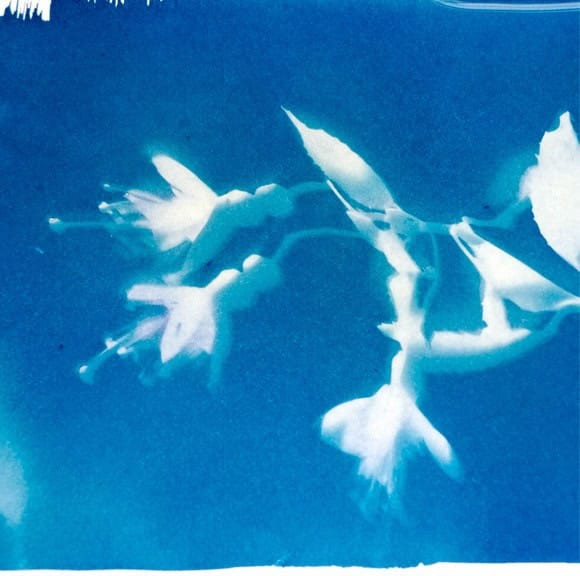
‘I love that deep Prussian blue produced by cyanotypes. The fact that it is a really eco-friendly process as it uses UV light and water to make a photogram is very appealing.’
Ruth enjoyed the scientific process of working out what ratio of chemicals, what types of paper or fabric worked well, how long to expose prints for to UV light and seeing how acids or spices interacted with the process. She gets all of her botanical specimens from the walks around her home in rural Northamptonshire with her lively Spaniel. She then presses them to preserve them.
‘This way I am not taking too much from nature which adds to the eco credentials of my work’.
Ruth is now working the other way round from her RAF days. Taking 3-D specimens and turning them into 2-D prints on fabric and paper which she then makes into lampshades, cushions, framed pictures, greetings cards and hand bound notebooks.
‘Every image is unique. I love that about cyanotype; I could never recreate the same image twice. The element of surprise is addictive.’
So Brilliance in Blue was borne out of a hobby that got ‘out of control.’
What is Cyanotype?
Cyanotype was invented by the British astronomer and chemist Sir John Hershel in 1842. The name cyanotype is derived from the Greek name cyan, meaning ‘dark-blue impression.’ From the 1870s until about the 1950s the cyanotype process was primarily used by engineers and architects to copy plans. It was then taken over by more modern reprographics.
Cyanotypes in science
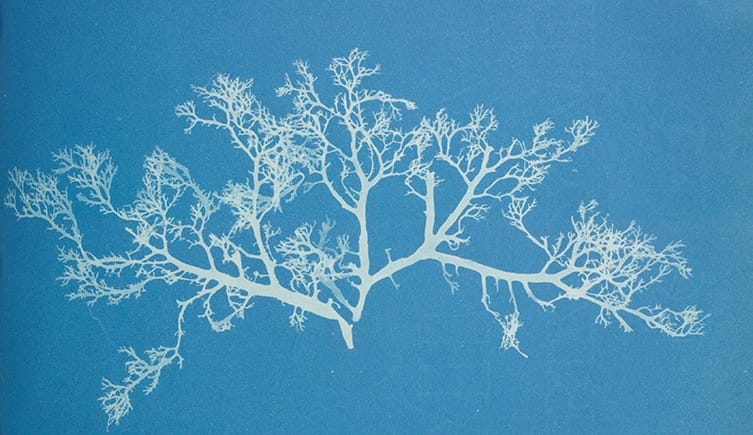
Anna Atkins, the botanist and early photographer used cyanotypes to illustrate her botanical studies. She published 3 volumes of her book ‘Photographs of British Algae: Cyanotype Impressions’ (1843–53). These books represent the earliest examples of books illustrated with photogenically produced images and not hand-drawn illustrations.
How does it work?
The entire process has several stages and each image takes several days to complete. For the chemists reading this: the general principle is the photochemical reduction of iron (III) salts to iron (II) salts. These then react with potassium ferricyanide, forming an intensely blue complex.
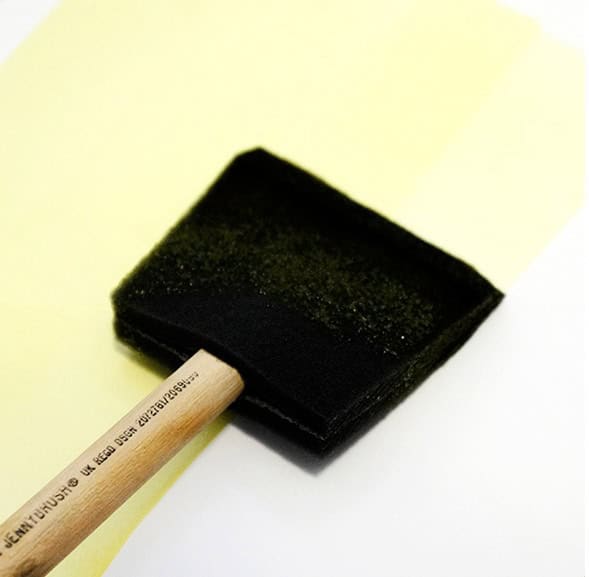
1. Fabric and paper is coated with a mixture of iron (III) salt (ferric ammonium citrate) and potassium ferricyanide. The coating must be applied under dim light due to light sensitivity.
2. The resulting yellow-greenish layer of sensitized material is dried in the dark.
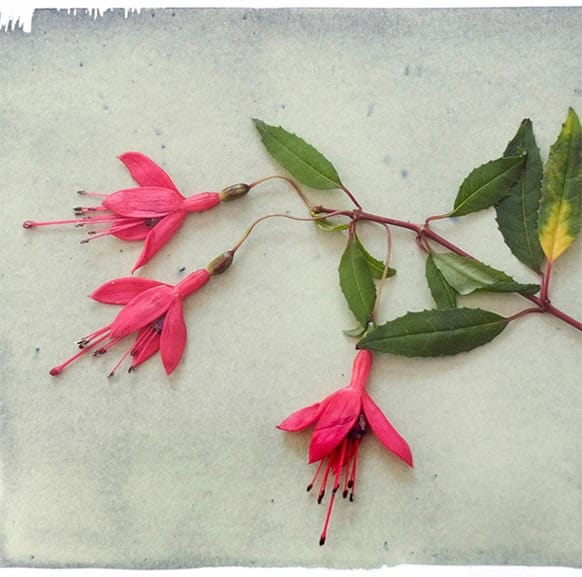
3. The dried, sensitized material has botanical specimens placed on it and is covered in a sheet of heavy glass to ensure a good contact is made between the sensitised material and the plants. It is then exposed to UV light (either a UV lamp or direct sunlight) for between 10 minutes and 6 hours.
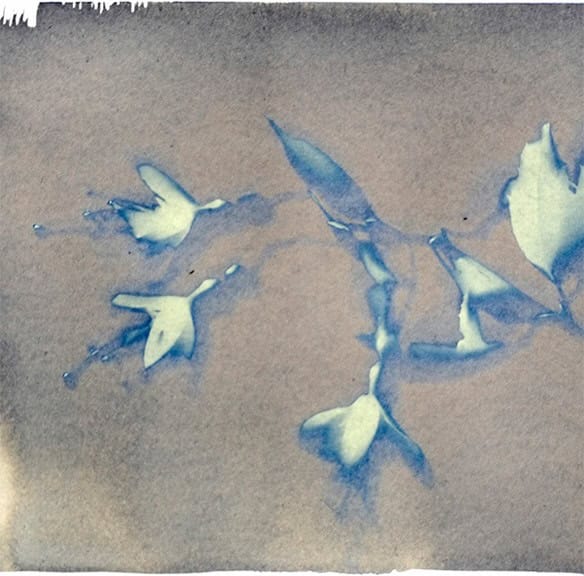
4. The exposed material is transferred to a water bath to complete the formation of Prussian blue in areas exposed to light and to dissolve any unexposed mixture of sensitizing compounds. Full development of the blue image only happens when the material is fully dried and oxidized by exposure to air. This can take a further 24-48 hours.
Step 1
Step 2
Step 3